
Hey there, fellow WordPress site owner—quick question: Have you ever woken up to find your site hacked, slowed to a crawl by malware, or dealing with endless login attempts that lock you out? Or maybe you’re just constantly worrying about the next vulnerability popping up in a plugin or theme? If that sounds familiar, you’re not alone. Security breaches happen way too often, and the scary part is that relying on just one plugin or basic setup often leaves big gaps.
The truth is, top agencies aren’t gambling on a single “magic” security tool anymore. As shared in a recent deep-dive on The Admin Bar (March 12, 2026), real-world agency owners swear by a layered approach—think of it like Swiss cheese: one slice has holes, but stack several and those holes get covered. No single solution closes every threat vector, so smart pros build defenses across multiple levels.
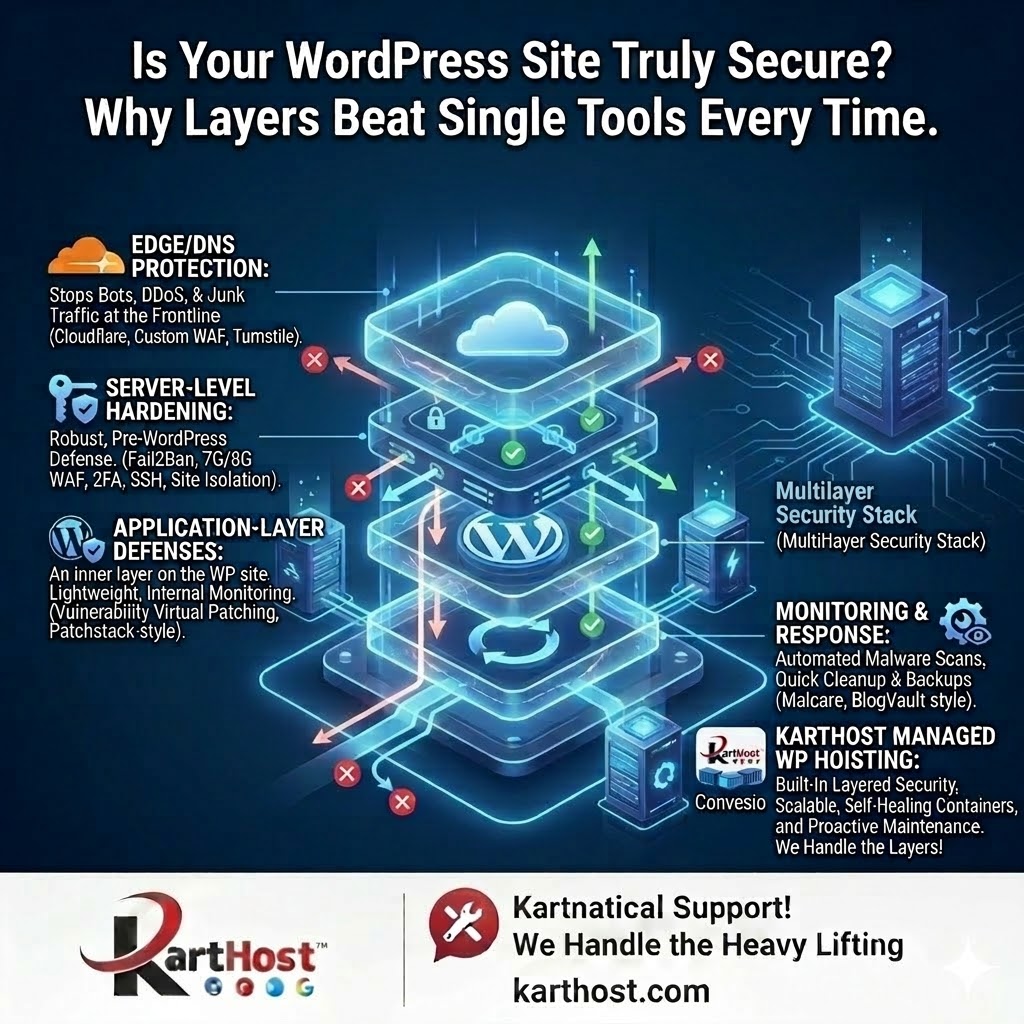
Here’s what that layered strategy typically looks like:
- Edge/DNS protection first — Tools like Cloudflare act as the frontline, stopping bots, DDoS attempts, and junk traffic before it even reaches your server. Almost every agency in the discussion uses it (often the free tier) with custom WAF rules, rate limiting, and features like Turnstile for extra bot defense. It keeps performance snappy since bad requests never hit your site.
- Server-level hardening — This is where things get robust: things like Fail2Ban (to block repeated bad logins), WAF rules (7G or 8G versions), SSH hardening, 2FA enforcement, and crucially, isolation—running each site under its own user account so one compromise doesn’t spread. Agencies on VPS or managed setups love this because it stops threats pre-WordPress, with low overhead.
- Application-layer defenses — Inside WordPress, lightweight vulnerability monitoring like Patchstack (for virtual patching and alerts) is gaining huge traction. Some still optimize Wordfence (focusing just on its firewall and monitoring to avoid bloat), but the shift is toward less resource-heavy options.
- Monitoring and response — Automated malware scanning and cleanup tools (Malcare, BlogVault, or WP Umbrella integrations) catch anything that slips through, with quick fixes and backups.
The big takeaway? Agencies are ditching bloated all-in-one plugins for these efficient, multi-layer stacks. It reduces load on the site, prevents cross-site issues, and gives peace of mind—especially for business, eCommerce, or client sites where downtime or data loss isn’t an option.
Source: The Best WordPress Security Solution for Agencies by Kyle Van Deusen on The Admin Bar.
So, how does this all connect back to you and your site? If you’re tired of piecing together security yourself—managing plugins, tweaking server rules, or stressing over updates—Karthost has your back. Our managed WordPress hosting runs on scalable, self-healing Convesio containers that deliver blazing-fast performance even under spikes, while built-in threat protection, secure installs, DNS safeguards, and automatic backend maintenance (including updates) handle much of the heavy lifting for you. No more manual hardening or worrying about isolation—our setup keeps your site secure at the foundation level, letting you focus on growing your business, eCommerce sales, or content instead of fighting fires.
Ready to layer real security without the hassle? Check out Karthost.com today and see how our managed approach pairs perfectly with those smart layered strategies. Your site (and your sanity) will thank you!